Work

Results you can measure.

From Fortune 50 companies to small start-ups, the need is the same: turning data into information that drives better decisions. Each case study follows the same shape: situation, what we did, outcome.

Case study 01 · Lead-gen · Customer journey

The $17M lead nobody was calling

$17M

estimated value of one routing fix

Situation

A lead-gen company's reports looked healthy, but its customer journey had a blind spot. When someone inquired, had their lead closed out, and later came back to the site, the re-inquiry was quietly filtered by routing logic and never reached the call center.

What we did

We walked the journey as a customer, then confirmed what we found in the data. Re-inquiries made up about 40% of all leads, and each one was worth twice as much as a brand-new inquiry. We then worked directly with the engineering team that built the software to find the routing logic. Together, we sent every re-inquiry to the call center and removed the old queuing rules entirely.

Outcome

The share of re-inquiries never reaching sales dropped from about half to zero. The fix was worth an estimated $17M and led to further improvements in call center processes, tracking and reporting. The team documented another $11M in wins on top of it.
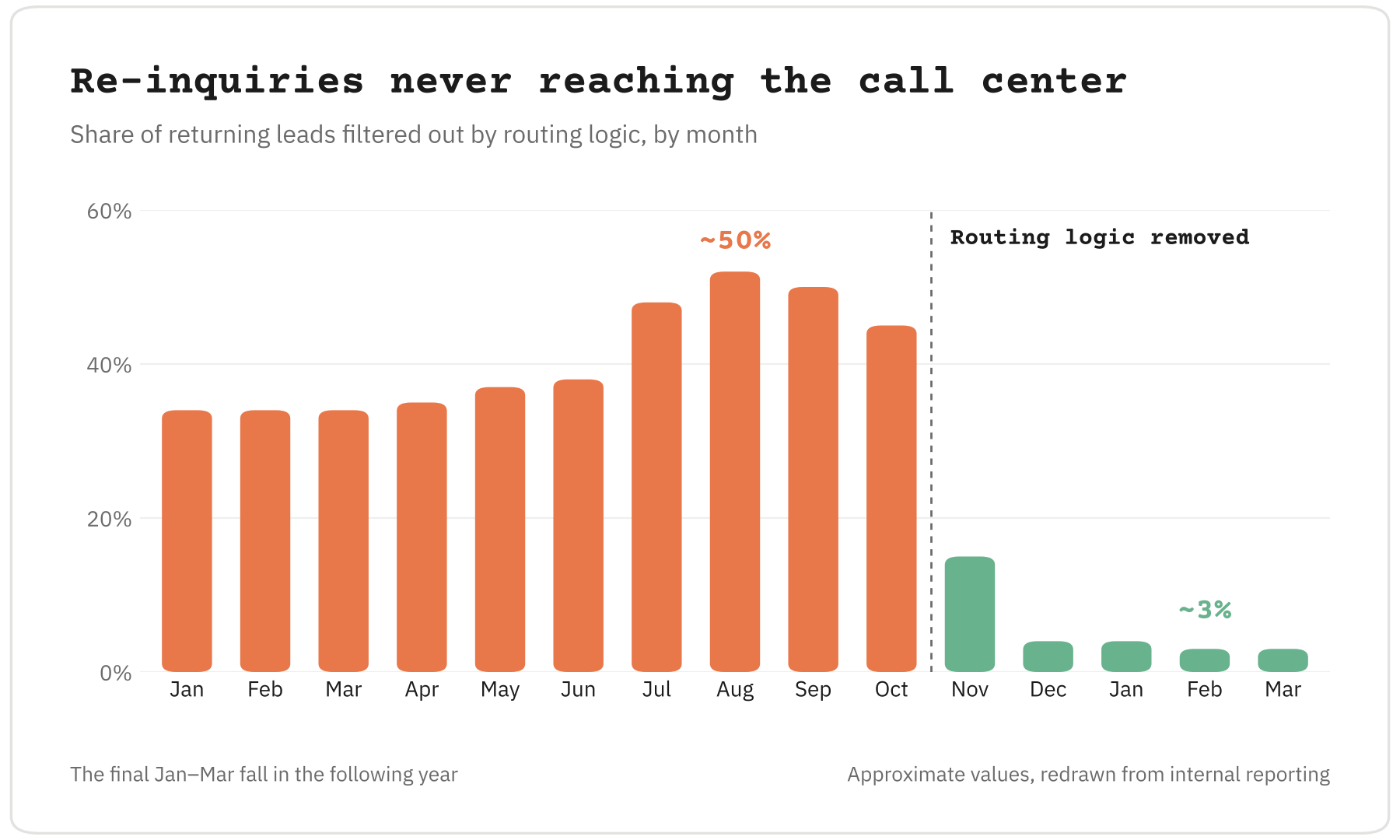
Re-inquiries never reaching sales, before and after the routing fix
Recreated from internal reporting. Client details removed.

Case study 02 · Enterprise ecommerce · Measurement

One measurement standard across 52 web properties

52

web properties on one standard

Situation

An enterprise ecommerce company ran 52 domains, subdomains and landing pages, each tracked its own way. No one could see what each site contributed to overall performance, and there was no way to scale analytics as the company grew.

What we did

We started by assessing the current tools, standards and gaps, then defined the ideal state with stakeholders. From there, we implemented one standardized, scalable measurement and monitoring plan across every property, built on the Google Marketing Platform: Analytics, Tag Manager, Data Studio and Google Cloud. We tied online and offline metrics together for a full-funnel view, and added QA procedures, API integrations, a testing program and training for each audience.

Outcome

Google itself described the result as a best-in-class analytics organization. The company now makes strategic decisions on metrics it trusts, and improves conversion through structured experimentation.

Case study 03 · Ecommerce · Server-side tracking

Recovering lost conversions by moving tracking server-side

+80% / +70%

more data and more purchases tracked

Situation

An ecommerce company had customers crossing several platforms on the way to checkout. Tracking dropped at each hand-off, and privacy restrictions obscured the final checkout and purchase data, so the team was making ad spend decisions on partial numbers.

What we did

We mapped the full customer journey end to end and identified every gap. Then we moved tracking server-side with server-side GTM and Stape, fixing what we could directly and bringing in developer support where it was needed. We also wrote the proposals, presented them at every level of the organization, and secured approval to proceed.

Outcome

Data capture rose about 80%, nearly doubling, and tracked purchases rose about 70%. Leadership got a complete view of the journey for business, resourcing and ad spend decisions, and the work delivered value immediately.

Case study 04 · Lead-gen · HubSpot, server-side, Ads

Connecting web, CRM and Ads into one attribution system

20 → 95

Stape tracking score in under a month

Situation

A lead-gen company on HubSpot had no server-side tracking and couldn't tie website activity to what happened in the CRM. Conversions were double counted in some places and missing in others, so attribution reporting and Ads optimization were unreliable.

What we did

We audited the existing setup, implemented server-side tracking from scratch, and then re-architected and rewired the rest. Hidden form fields, custom HubSpot fields and workflows now carry key identifiers through the system. GTM and server-side GTM send both online and offline (CRM) conversions to analytics and the ad platforms, and CRM events go straight to the server container.

Outcome

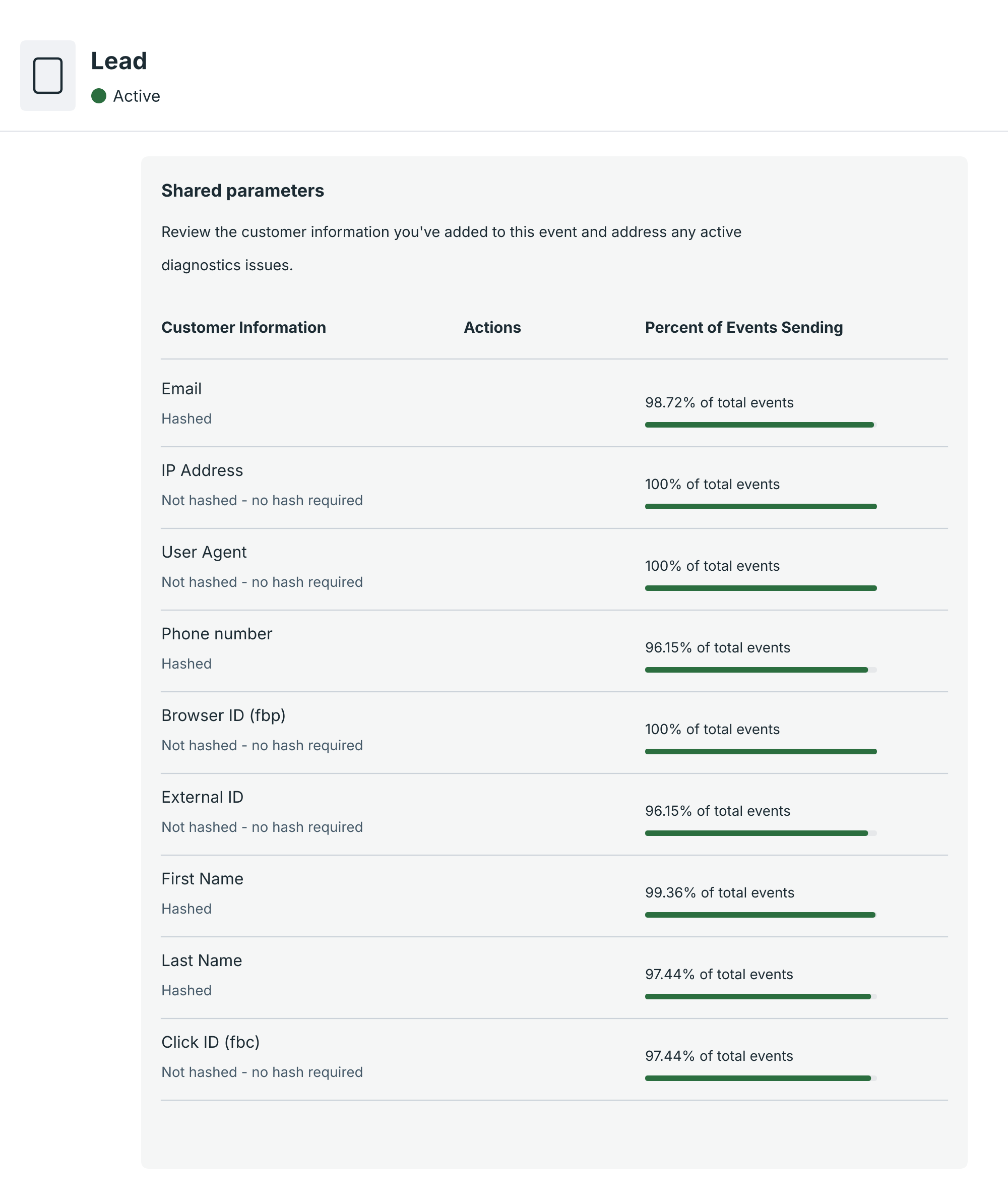
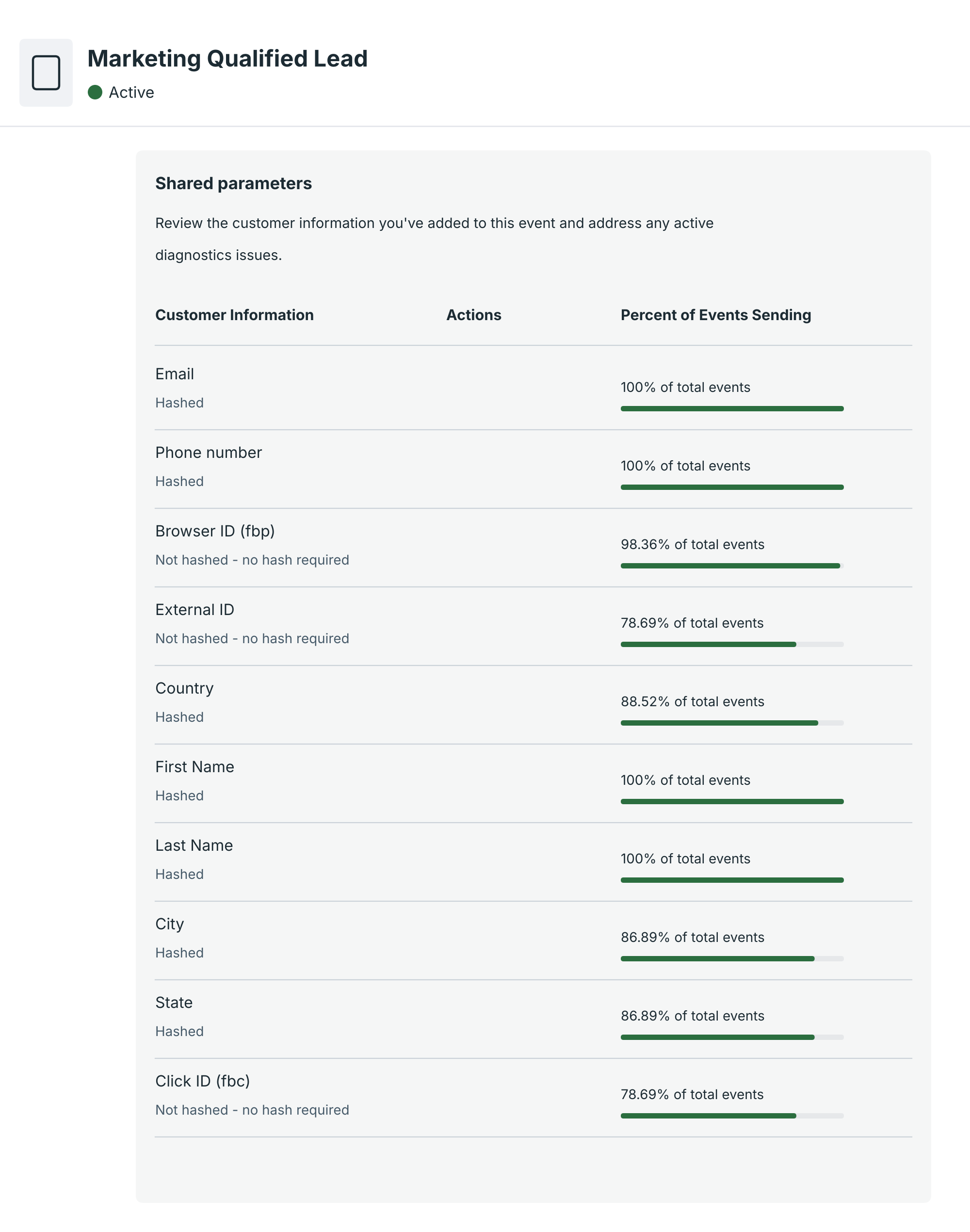
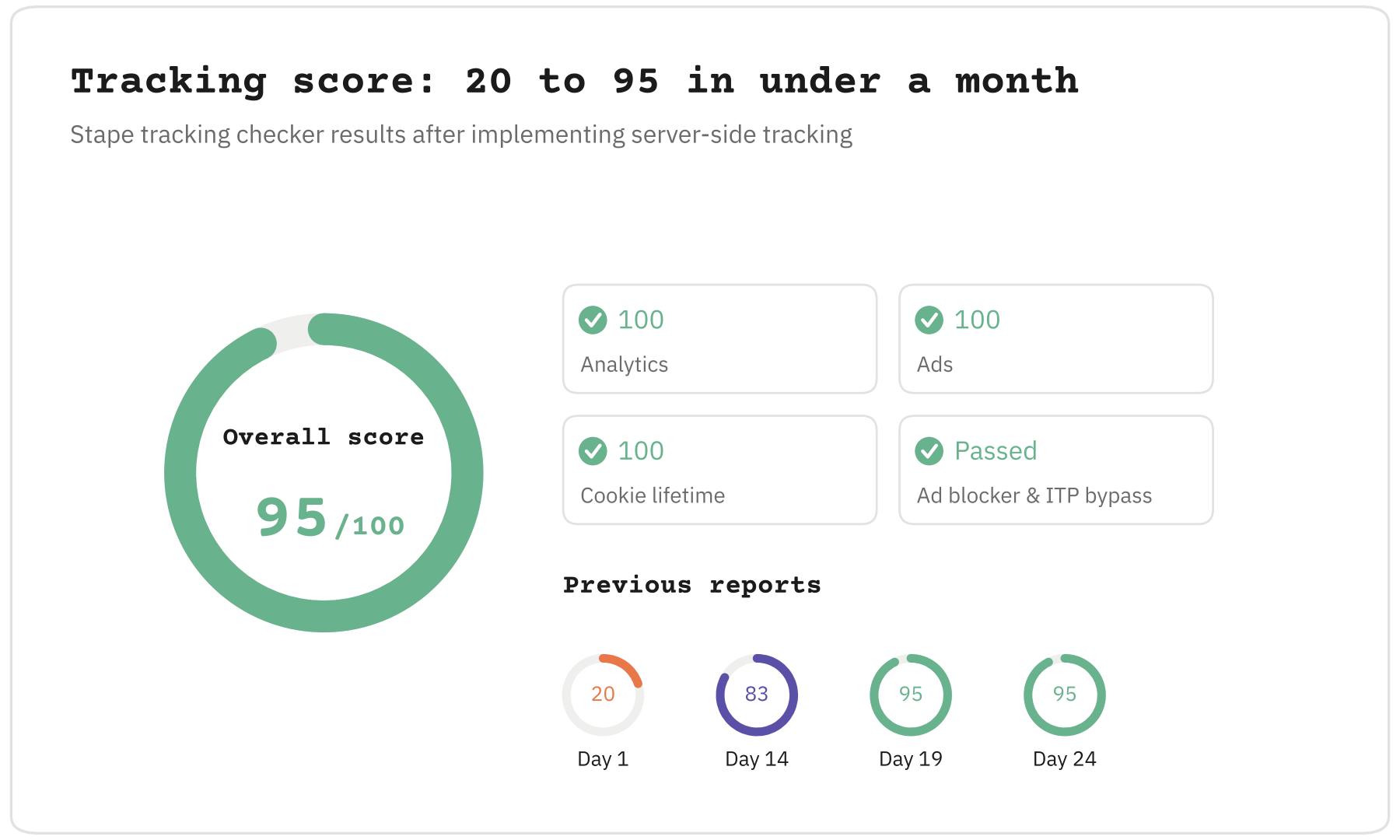
Stape's tracking score rose from an initial 20 to 95/100 in under a month, with full marks for analytics, ads and cookie lifetime and tracking that now gets past ad blockers and Safari's ITP. The remaining points are page speed, tied to legacy integrations the client is retiring on its own schedule. The result is one connected view from first visit to closed deal, with no double counting, recovered missing data, and accurate attribution feeding Ads bidding. Both sides of the funnel now reach Meta with near-complete customer information, within the client's consent rules. Web events carry IP, user agent and browser ID on 100% of events, and hashed email, name, phone and click ID on 96–99%. Offline sales funnel conversion events carry hashed email, phone and name on 100% and the browser ID on 98%, so Meta can tie closed deals back to the original ad click.

Stape tracking score rising from 20 to 95 in under a month
Recreated from Stape tracking checker results. Client details removed.
Meta Events Manager coverage for web events
Recreated from Meta Events Manager. Client details removed.
Meta Events Manager coverage for offline sales funnel events
Recreated from Meta Events Manager. Client details removed.

How trustworthy is your data?

Are you capturing the key steps in your customer's journey? Can you connect online and offline data? Would your conversion numbers survive an audit?

Start with a Health Check. We review how your site tracks the customer journey, how consent is handled, and what your ad platforms are actually being told. You get a plain-English findings report and a prioritized fix list. View your data with confidence.